Add more memory
This isn’t a guide to buying hardware that will speed up your computer. But no discussion of how to make Windows run faster would be complete without mentioning that you should consider adding more random access memory (RAM) to your PC.
If a computer running Windows 7 seems too slow, it’s usually because the PC doesn’t have enough RAM. The best way to speed it up is to add more.
Windows 7 can run on a PC with 1 gigabyte (GB) of RAM, but it runs better with 2 GB. For optimal performance, boost that to 3 GB or more.
Another option is to boost the amount of memory by using Windows Ready Boost. This feature allows you to use the storage space on some removable media devices, such as USB flash drives, to speed up your computer. It’s easier to plug a flash drive into a USB port than to open your PC case and plug memory modules into its motherboard. For more information, see using memory in your storage device to speed up your computer.
Check for viruses and malware by UPCleaner
If your PC is running slowly, it’s possible that it’s infected with a virus or malware. This is not as common as the other problems, but it’s something to consider. Before you worry too much, check your PC system using the best pc optimizer.
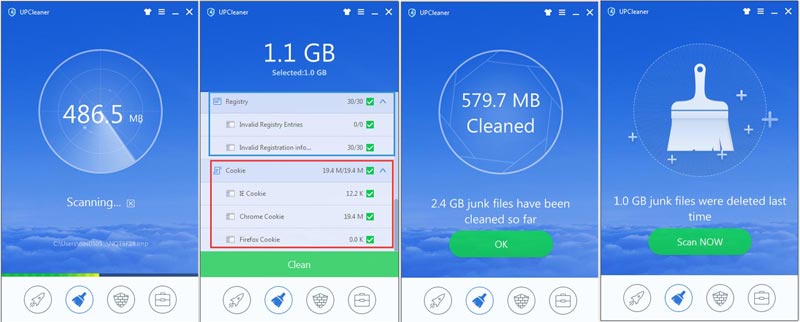
A common symptom of a virus is a much slower-than-normal computer performance. Other signs include unexpected messages that pop up on your PC, programs that start automatically, or the sound of your hard disk constantly working.
Malware is a type of program that’s installed, usually without your knowledge, to watch your activity on the Internet. You can check for malware with Windows Defender or other anti malware programs. For more information, see How to tell if your computer is infected with malware.
The best way to deal with viruses is to prevent them in the first place. Always run antivirus software and keep it up to date. Even if you take such precautions, however, it’s possible for your PC to become infected. For more information, see how can I tell if my computer has a virus?
Check your computer’s speed by UPCleaner
If you try these tips and your computer is still too slow, you might need a new PC or some hardware upgrades, such as a new hard disk or faster video card. There’s no need to guess the speed of your computer, however. Windows provides a way to check and rate your PC’s speed with a tool called the windows experience index.
The Windows Experience Index rates your computer on five key components and gives you a number for each, as well as an overall base score. This base score is only as good as your worst-performing component subscore.
Base scores currently range from 1 to 7.9. If your PC is rated lower than 2 or 3, it might be time to consider a new PC, depending on what tasks you want to do with your computer.
UPCleaner offers the best malware removal like remove v9 service to users, protecting your PC from all aspects including browser protection, password management and privacy information protection.
Showing posts with label UPCleaner tool. Show all posts
Wednesday, March 30, 2016
Thursday, March 24, 2016
Use UPCleaner to remove junk of uninstalled apps
UPCleaner is the free computer cleaner for cleaning your windows PC. UPCleaner protects your privacy online and makes your computer faster and more secure.
UPCleaners don't have a magic wand that will magically improve your PC's speed. Chiefly they do the following:
Clean out disk space-the built in windows utility can perform the same task.
Deleting temp files- can be done manually through Windows.
Registry cleaning: Cleaning the registry will hardly contribute to performance improvements. There's a reason why Microsoft disabled its registry cleaning tool.
Removing junk of uninstalled apps- poorly coded programs can leave some data while being uninstalled. These programs can delete this (mainly trivial) data.
UPCleaner can effectively scan for and anti malware free download on your computer quickly.
Infact, many of the tools out there are a sham. Their feature set is low and they con users. Same goes for stuff like driver updaters or memory optimizers. If you do need a cleaning tool, choose UPCleaner. It's free and won't screw up windows.
UPCleaners don't have a magic wand that will magically improve your PC's speed. Chiefly they do the following:
Clean out disk space-the built in windows utility can perform the same task.
Deleting temp files- can be done manually through Windows.
Registry cleaning: Cleaning the registry will hardly contribute to performance improvements. There's a reason why Microsoft disabled its registry cleaning tool.
Removing junk of uninstalled apps- poorly coded programs can leave some data while being uninstalled. These programs can delete this (mainly trivial) data.
UPCleaner can effectively scan for and anti malware free download on your computer quickly.
Infact, many of the tools out there are a sham. Their feature set is low and they con users. Same goes for stuff like driver updaters or memory optimizers. If you do need a cleaning tool, choose UPCleaner. It's free and won't screw up windows.
Monday, March 21, 2016
Use UPCleaner to update windows and security
In the morning of Monday, you open the computer and receive a message of windows system update notification from the free computer cleaner. It may be a pain, but the truth is updates are more than just bug fixes and improvements to the way something looks. 9 time out of 10, updates provide security features that make the program safer, keeping your data protected while also providing those key features that you rely on.
There’s no doubt about it, auto-updates can feel like bullying, especially if Windows is pressuring you to restart, over and over again. Some people just turn updates off, but that’s no solution – especially when it turns out you really need what the updates offer.
The happy medium is learning the tricks to controlling auto-updates. Changing the settings so that these things still get through, but on your schedule.
Windows and Microsoft Updates
Control updates that come from Microsoft by opening the Windows search and typing Windows Update. This will open the update manager, a controller that will tell you how your computer is set to receive updates.
Security Updates
Security platforms are a little different – not just those from Microsoft, but all anti-virus and anti-malware free download programs work by routinely downloading new profiles for harmful malware and viruses. These profiles are called definitions and depending on the program, it may retrieve definitions on very frequent schedules, even daily.
Controlling these is a matter of going into the settings menu of a given security program and adjusting the default update options. This is easier said than done in some cases, but generally a Web search will tell you how to manage updating for your security program.
If it can be managed that is. Often, merely having the program on and actively looking for bugs includes the routine download of definitions. Given this situation, you’re safer leaving things like “active scanning” or “active protection” or “real-time protection” set to on.
But even so, it’s your computer. So if updates are part of the active scanning process and they’re hampering your computer by making it slow, you might want to reconsider your security setup. There are lots of good and reputable security platforms that may work well, but act a little bullish when it comes to managing their definitions downloads. If you have one of them, you have to weigh the value they provide against the inconvenience of routine updating and how it impacts your day-to-day computing.
Thursday, March 10, 2016
Speed up Your Windows PC with UPCleaner
Is your PC moving at a snail’s pace? You could upgrade your machine with a solid state drive (SSD), but there are cheaper and easier methods for speeding up your Windows PC. More often than not, installing (or uninstalling) software updates and deep cleaning your hard drive is all you need to make your PC run more efficiently. When things start running slow, it normally means your computer is cluttered, and that’s a much easier fix than an internal-hardware problem (that’s another post for another day).
1. Update Your Software
Ensuring that your computer’s software is up to date is one of the easiest things you can do to increase the speed at which your PC operates.
You can check for software updates in Windows (Take Windows 7 as an example) by clicking on the following: “Control Panel -> System and Security -> Check for Updates.” Follow the onscreen steps to install the updates.
2. Clean Out Your Files
Whether you know it or not, computers have a bad habit of getting overrun with unnecessary files that hog valuable space and bog down your PC. Take some time to go through your files and get rid of any outdated files; you don’t need entire application suites you no longer use. Deleting software you don’t use can also free up some memory on your hard drive as can deleting temporary Internet files and trial apps.
You can delete any unwanted apps in Windows by navigating to “Control Panel -> Programs -> Uninstall Program.” To delete unwanted files, all you have to do is Right Click -> Delete or drag the document to your Recycle Bin. Backing up any documents, music, or pictures you have to the cloud storage server of your choice will help speed things up too.
3. Defragment Your Hard Drive
Saving and deleting files causes your data to be tossed across your hard drive in bits like the crumbs a toddler trails across the living room floor during an afternoon snack. So when your hard drive goes looking for something, it might have to search multiple locations, thereby slowing your PC down. Defragmenting your hard drive cleans up the mess and organizes it, making it easier for your computer to find something when it looks for it.
Defragmenting is incredibly easy to do, but you can take notes if you really want to:
If you’re running Windows Vista or later, your hard drive automatically defragments itself. On Windows, if you want to check when defragmenting is happening and change up when it’s scheduled to happen, just click “Control Panel -> System and Security -> Administrative Tools.” This is where you’ll find the option manually defragment your hard drive. The process will take anywhere from a few minutes to a couple of hours when you defragement manually. It just depends on how bogged down your PC is.
4. Optimize Your PC with Native and Third-Party Software
Third-party software can do wonders for your PC’s speed. One of the free computer optimizer listed below comes highly recommended for cleaning up browser histories, deleting unnecessary files, unburdening your system, and improving overall speed.
UPCleaner – the Ultimate PC Cleaner is, in simplest terms, a multi-functional cleanup tool as the best computer cleaner. If your PC is struggling and clearly coughing up errors and working intermittently, UPCleaner can bring it back.
After installing, you can click the second icon on the main interface and let UPCleaner automatically scan junk files for you. Then, select the item that you want to clean and click the button to finish it in a few seconds.
1. Update Your Software
Ensuring that your computer’s software is up to date is one of the easiest things you can do to increase the speed at which your PC operates.
You can check for software updates in Windows (Take Windows 7 as an example) by clicking on the following: “Control Panel -> System and Security -> Check for Updates.” Follow the onscreen steps to install the updates.
2. Clean Out Your Files
Whether you know it or not, computers have a bad habit of getting overrun with unnecessary files that hog valuable space and bog down your PC. Take some time to go through your files and get rid of any outdated files; you don’t need entire application suites you no longer use. Deleting software you don’t use can also free up some memory on your hard drive as can deleting temporary Internet files and trial apps.
You can delete any unwanted apps in Windows by navigating to “Control Panel -> Programs -> Uninstall Program.” To delete unwanted files, all you have to do is Right Click -> Delete or drag the document to your Recycle Bin. Backing up any documents, music, or pictures you have to the cloud storage server of your choice will help speed things up too.
3. Defragment Your Hard Drive
Saving and deleting files causes your data to be tossed across your hard drive in bits like the crumbs a toddler trails across the living room floor during an afternoon snack. So when your hard drive goes looking for something, it might have to search multiple locations, thereby slowing your PC down. Defragmenting your hard drive cleans up the mess and organizes it, making it easier for your computer to find something when it looks for it.
Defragmenting is incredibly easy to do, but you can take notes if you really want to:
If you’re running Windows Vista or later, your hard drive automatically defragments itself. On Windows, if you want to check when defragmenting is happening and change up when it’s scheduled to happen, just click “Control Panel -> System and Security -> Administrative Tools.” This is where you’ll find the option manually defragment your hard drive. The process will take anywhere from a few minutes to a couple of hours when you defragement manually. It just depends on how bogged down your PC is.
4. Optimize Your PC with Native and Third-Party Software
Third-party software can do wonders for your PC’s speed. One of the free computer optimizer listed below comes highly recommended for cleaning up browser histories, deleting unnecessary files, unburdening your system, and improving overall speed.
UPCleaner – the Ultimate PC Cleaner is, in simplest terms, a multi-functional cleanup tool as the best computer cleaner. If your PC is struggling and clearly coughing up errors and working intermittently, UPCleaner can bring it back.
After installing, you can click the second icon on the main interface and let UPCleaner automatically scan junk files for you. Then, select the item that you want to clean and click the button to finish it in a few seconds.
Wednesday, March 2, 2016
5 PC Cleaning Tools to Speed Up Your Computer
Does it take forever for your PC applications to load? Are web pages loading slowly despite your super-fast broadband connection? Is your hard drive riddled with duplicate files and the detritus of old programs and settings? Maybe it’s time for your system to enjoy a bit of spring cleaning. Here are a few free utilities that specialize in "cleaning" your PC. Among other things, these applications can remove unnecessary files, track down duplicates, and help insure clean uninstalls—speeding up your system and cleaning out space used by junk and temporary files.
CCleaner
Let’s start with one of the more popular utilities. CCleaner is an application that works primarily with your PC’s registry (a repository of configuration information that other applications rely on). On a PC, the larger the registry gets, the more likely the computer slows down. So CCleaner removes anything unnecessary from the registry. On top of that, the utility also removes temporary files and clears your browser cookies. This means CCleaner is also a security tool of sorts, removing the information that can tell others what you’ve been doing with your PC.
WinUtilities
WinUtilities offers users a range of tools to clean up and optimize their file system. Registry backup and cleaning, program cache and temp file dumping, duplicate file search, a file shredder, and more are available in this free suite of programs. A customizable one-click maintenance function allows you to run a battery of utilities without having to open up each submenu. Scheduled tasks are among the features of the Pro version.
UPCleaner
Like CCleaner, UPCleaner is essential free pc cleaner completely dedicated to the thorough cleaning of the PC. The application, available in 5 languages, has seen resounding success since its launch and has steadily improved with each new version. Those who are looking for a suitable tool to cleaner PC with one-click won’t be disappointed. It’s easy-to-use and simple to install.
It provides you smart optimization schemes and speeds up your computer. UPCleaner can clear memory to keep your computer at peak performance on real-time, cleaning your RAM and enhancing the performance of your system.
Revo Uninstaller
Revo Uninstaller is an excellent free utility that augments Windows' own uninstall system by tracking downfiles and settings left behind during an uninstall. Unfortunately, the current free version is severely limited by the lack of 64bit compatibility, a major downside in an otherwise excellent free tool. The paid version unlocks loads of extra features such as system monitoring during install and the ability to clean up botched installations.
Should I Remove It?
Sick of bloatware, unnecessary toolbars, and other extraneous crap slowing your system down? Perhaps an application like 'Should I Remove It?' might be helpful. Should I Remove It? It performs a quick scan of your installed software, compares with its servers, and then displays the software in order, with starred ratings and color-coded bars that recommend keeping or replacing the software. You can click on the entries for more information, which will link to Should I Remove It?'s page, with a short description and known behaviors. A useful tool for those looking to clear up cluttered systems.
Tuesday, February 23, 2016
The best ultimate pc cleaning utility of 2016
There’s a very good chance that your lethargic computer could have in it still a second (or third!) life with a relatively inexpensive tool: a pc cleaner and system optimizer tune-up utility.
A tune-up utility is an application that digs deep into your computer and fixes trouble areas. It performs several functions, including:
1. Defragment your PC’s hard drive;
2. Repair the incredibly problematic Windows registry;
3. Delete useless and duplicate files.
Some tune-up utilities perform just those basic functions, while more elaborate ones add numerous features that improve your computer in interesting ways.
I’m sure you’ve heard about the program called UPCleaner – cleaner for pc, the best windows optimization tool of 2016 that will make your computer faster, fix all errors, stop crashing, and make it possible to keep using your old computer without having to buy a new one.
UPCleaner really brings your computer back to its out-of-the-box state it was in when you bought it. It also has a borwser web protection that secures your browser with a one-click lock. All of them work well enough and can be used for quick PC maintenance.
Monday, February 22, 2016
Get organized your PC system free
We use Windows for work, for browsing and for gaming. Files of different kinds gather in your computer and it responds slower and slower. Everyone can operate the windows system, but when it comes to optimizing the way your PC works, maybe you can make it with the system tool itself, or with an easier way, to have a free pc optimizer like UPCleaner.
Whether you’re the type of person that prefers neat-and-tidiness, or you’re laid back, letting things install where they want, it never hurts to keep tabs on where things are ending up. There are lots of tools of best system optimizer designed to “clean up” your desktop, but in the end, the best person to sort your stuff is you.
The 1-2-3 technique: Most of your stuff is already distributed into folders, but what about controlling the way the folders themselves are organized? Try to finagle your stuff into in a 3-tier system. Let the highest tier be the most generic. Windows will help you out here since it already includes category folders in your Libraries directory.
You know the ones: “My Pictures” “My Music” “My Documents” and “My Video.” Truth be told, there’s no better place to store these respective media, especially since Windows tries its hardest to let you navigate to them easily. These make a good tier-1, but they don’t have to be. If you want, make general category folders with whatever names you prefer.
Now, don’t let yourself make more than two more tiers of organization beneath the first. Divide your things into folders with names that make sense to you, that’s tier-2. In each of these, feel free to subdivide things into more folders (tier-3), but that’s it! No more subdividing. If you still need to get control of your files’ layout, it’s time to try renaming files in meaningful ways that will help you sort.
For digital media like photos, videos and music; one of the best ways to keep track of big libraries is to use a media manager. If you are not satisfied with the one you have now, or it is a bad software with too many ads and malwares, you can uninstall it like remove v9 with the anti malware tool- UPCleaner.
Whether you’re the type of person that prefers neat-and-tidiness, or you’re laid back, letting things install where they want, it never hurts to keep tabs on where things are ending up. There are lots of tools of best system optimizer designed to “clean up” your desktop, but in the end, the best person to sort your stuff is you.
The 1-2-3 technique: Most of your stuff is already distributed into folders, but what about controlling the way the folders themselves are organized? Try to finagle your stuff into in a 3-tier system. Let the highest tier be the most generic. Windows will help you out here since it already includes category folders in your Libraries directory.
You know the ones: “My Pictures” “My Music” “My Documents” and “My Video.” Truth be told, there’s no better place to store these respective media, especially since Windows tries its hardest to let you navigate to them easily. These make a good tier-1, but they don’t have to be. If you want, make general category folders with whatever names you prefer.
Now, don’t let yourself make more than two more tiers of organization beneath the first. Divide your things into folders with names that make sense to you, that’s tier-2. In each of these, feel free to subdivide things into more folders (tier-3), but that’s it! No more subdividing. If you still need to get control of your files’ layout, it’s time to try renaming files in meaningful ways that will help you sort.
For digital media like photos, videos and music; one of the best ways to keep track of big libraries is to use a media manager. If you are not satisfied with the one you have now, or it is a bad software with too many ads and malwares, you can uninstall it like remove v9 with the anti malware tool- UPCleaner.
Saturday, February 20, 2016
For browser security—cleaning up your cookies
Every day we log in to our social media accounts, check emails, manage our online banking and do some e-shopping with our internet browser. Your browser tends to hold onto various information and files to ensure maximum optimization and faster load time. Unfortunately, this could cause problems over time. For example, it may makes your computer slower because of the junk files left, and records of surfing, needed of a computer cleaner to clean up all the cookies.
It’s always a good idea to clear out the cache, browser history and clear cookies on a regular basis. This allows you to avoid browser errors as well as allowing you to preserve your online security.
Before we get into the nitty-gritty, let’s understand define the terms cache and cookies
Cache
Web caches reduce the amount of information that needs to be transmitted across the network. They also reduce bandwidth and processing requirements of the web server, and helps to improve responsiveness for users of the web.
According to the Merriam Webster dictionary, the Cache is a part of a computer’s memory where information is kept so that the computer can find it very quickly. The basic purpose of cache memory is to store program instructions that are frequently re-referenced by software or a web site during operation.
Cookies
Cookies were designed to be a reliable mechanism for websites to remember information such as items in a shopping cart or to record the user’s browsing activity.
Although cookies cannot carry viruses or install malware on your computer, if you don’t have an anti-malware tool on your PC, tracking cookies and especially third-party tracking cookies are commonly used as ways to compile detailed tracking information of your surfing habits as well as of you browsing history.
Combined with the fact that cookies have the ability to store information such as credit numbers, address, full name and passwords they become a true privacy concern. So much so that it prompted European and U.S. law makers to take action in 2011.
The ‘Cookie Law’ dictates that consent must be collected from web users before placing a cookie on their computer. Online businesses are also being urged to sort out how they get consent so they can keep on using cookies. Today, many websites will deliver a consent screen when you visit their sites for the first time asking for your permission to receive all cookies.
But how to clean up the cookies on your browser? Taking google chrome for example, you can click the Chrome menu, select More tools, select Clear browsing data, Select the check boxes for the types of information that you want to remove in the dialog that appears and use the menu at the top to select the amount of data that you want to delete. Select beginning of time to delete everything.
Another way, which is easier to operate, is to install the computer optimizer —UPCleaner, just check the browser web protection function and it will protect your browser privacy all the time.
It’s always a good idea to clear out the cache, browser history and clear cookies on a regular basis. This allows you to avoid browser errors as well as allowing you to preserve your online security.
Before we get into the nitty-gritty, let’s understand define the terms cache and cookies
Cache
Web caches reduce the amount of information that needs to be transmitted across the network. They also reduce bandwidth and processing requirements of the web server, and helps to improve responsiveness for users of the web.
According to the Merriam Webster dictionary, the Cache is a part of a computer’s memory where information is kept so that the computer can find it very quickly. The basic purpose of cache memory is to store program instructions that are frequently re-referenced by software or a web site during operation.
Cookies
Cookies were designed to be a reliable mechanism for websites to remember information such as items in a shopping cart or to record the user’s browsing activity.
Although cookies cannot carry viruses or install malware on your computer, if you don’t have an anti-malware tool on your PC, tracking cookies and especially third-party tracking cookies are commonly used as ways to compile detailed tracking information of your surfing habits as well as of you browsing history.
Combined with the fact that cookies have the ability to store information such as credit numbers, address, full name and passwords they become a true privacy concern. So much so that it prompted European and U.S. law makers to take action in 2011.
The ‘Cookie Law’ dictates that consent must be collected from web users before placing a cookie on their computer. Online businesses are also being urged to sort out how they get consent so they can keep on using cookies. Today, many websites will deliver a consent screen when you visit their sites for the first time asking for your permission to receive all cookies.
But how to clean up the cookies on your browser? Taking google chrome for example, you can click the Chrome menu, select More tools, select Clear browsing data, Select the check boxes for the types of information that you want to remove in the dialog that appears and use the menu at the top to select the amount of data that you want to delete. Select beginning of time to delete everything.
Another way, which is easier to operate, is to install the computer optimizer —UPCleaner, just check the browser web protection function and it will protect your browser privacy all the time.
Monday, February 15, 2016
Seven Ways to Protect You Online Shopping
The internet is a staple in many people's everyday lives. It is a great place full of wonderful information, but it is also full of many dangers. The price of banking, shopping, and interacting online might be your personal information. To stay safe on the internet, use the following strategies.
1.Choose strong passwords.
Passwords are like the key to your accounts - only the person with the key can access them. When choosing a password, you want to make sure you choose one that is unique, strong, and not easily guessed by strangers or those close to you. Choose a password that uses letters, numbers, lower case, upper case, and characters.
2.Be mindful when installing programs or agreeing to terms.
When you sign up for newsletters, install programs, or agree to anything, read the fine print. If you do not want to receive junk mail or get put on a telemarketer list, look for a small box near the bottom of the page that asks if you want to receive information and offers from other companies. The best sites will have a statement listed that they will not sell your name to other companies (though they may still send you e-mails themselves).
3.Do not give out personal details to strangers.
Don't give your full name, address, or phone number to anyone online that you don't trust or know. This is especially important in chat rooms, when negotiating jobs or deals, or making plans through meet-up sites.
4.Don't fall prey to phishing scams.
Phishing e-mails are messages that appear to be from legitimate companies, such as your bank or stores where you've shopped, that provide links to fake websites and ask for personal information.
5.Keep your eyes peeled for online scams.
Online scams crop up everywhere. These scams can pop up in e-mails, tweets, Facebook posts, and many other places. Don't click on links that don't look like a real address or contains a lot of letters and characters that look like gibberish.
6.Limit the information you share on social media.
Facebook, Twitter, Google+, Instagram, LinkedIn, and other social media sites are part of most people's every day lives. On Facebook, people post their maiden names, their parents' names, their birthdays, the birthdays of their children, their hometowns, their home address, their home and cell phone numbers, along with myriad other personal information. This information gives anyone with a computer just about every essential piece of information about you.[9] Limit what you share online to protect your identity and privacy.
7.Have multiple e-mail accounts.
It's best to have three accounts. Multiple e-mails help you separate different aspects of your life, gives you official and non-official addresses, and can help you cut down on spam and privacy issues.
UPCleaner is a free computer cleaner designed to speed up your computer by quickly cleaning junk files and smartly disabling unwanted programs running in the background, this is definitely one of the best pc optimizer programs; UPCleaner also work as a computer optimizer and malware removal with web browser protection function, it can clean malware from your computer and protect your online privacy, guarantee the safety of your data.
1.Choose strong passwords.
Passwords are like the key to your accounts - only the person with the key can access them. When choosing a password, you want to make sure you choose one that is unique, strong, and not easily guessed by strangers or those close to you. Choose a password that uses letters, numbers, lower case, upper case, and characters.
2.Be mindful when installing programs or agreeing to terms.
When you sign up for newsletters, install programs, or agree to anything, read the fine print. If you do not want to receive junk mail or get put on a telemarketer list, look for a small box near the bottom of the page that asks if you want to receive information and offers from other companies. The best sites will have a statement listed that they will not sell your name to other companies (though they may still send you e-mails themselves).
3.Do not give out personal details to strangers.
Don't give your full name, address, or phone number to anyone online that you don't trust or know. This is especially important in chat rooms, when negotiating jobs or deals, or making plans through meet-up sites.
4.Don't fall prey to phishing scams.
Phishing e-mails are messages that appear to be from legitimate companies, such as your bank or stores where you've shopped, that provide links to fake websites and ask for personal information.
5.Keep your eyes peeled for online scams.
Online scams crop up everywhere. These scams can pop up in e-mails, tweets, Facebook posts, and many other places. Don't click on links that don't look like a real address or contains a lot of letters and characters that look like gibberish.
6.Limit the information you share on social media.
Facebook, Twitter, Google+, Instagram, LinkedIn, and other social media sites are part of most people's every day lives. On Facebook, people post their maiden names, their parents' names, their birthdays, the birthdays of their children, their hometowns, their home address, their home and cell phone numbers, along with myriad other personal information. This information gives anyone with a computer just about every essential piece of information about you.[9] Limit what you share online to protect your identity and privacy.
7.Have multiple e-mail accounts.
It's best to have three accounts. Multiple e-mails help you separate different aspects of your life, gives you official and non-official addresses, and can help you cut down on spam and privacy issues.
UPCleaner is a free computer cleaner designed to speed up your computer by quickly cleaning junk files and smartly disabling unwanted programs running in the background, this is definitely one of the best pc optimizer programs; UPCleaner also work as a computer optimizer and malware removal with web browser protection function, it can clean malware from your computer and protect your online privacy, guarantee the safety of your data.
Sunday, January 31, 2016
UPCleaner protecting you pc away from malware
It is very dangerous that this form of malware can be adapted to steal user credentials such as account access or financial information, once your computer has affected this malware, you need use the free pc cleaner to scan your pc and make a malware removal as soon as possible.
Online security company security reported the infection on their blog, stating that “At this point, we can suspect that it was some vulnerability in magento or one of the third-party extensions that allowed it to infect thousands of sites within a short time.” Google has responded to the attack by blocking over 8000 domains suspected of having been compromised. There is no doubt that the malware stealing information of users will bring a great trouble, and cause lose to owner of credit account.
How to avoid the stealing of financial information? First, make sure to update everything: core files and extensions. Since the vulnerability provides access to your database, hackers could use it to create malicious admin users; second, install the system optimizer and malware removal software.
Friday, January 29, 2016
How to Remove Safe.v9.com virus (Removal Guide)
Safe.v9.com is a browser hijacker, which is promoted via other free downloads, and once installed it will change your browser homepage and default search engine to safe.v9.com. how to realize the remove v9, a good choice is the UP Cleaner – best pc optimizer.
How to Remove Safe.v9.com virus
The safe.v9.com, this in itself is not considered malicious as there are many legitimate programs that change these settings as well. What is considered malicious, though, is that it will also append the argument http://safe.v9.com/ to random Windows shortcuts on your desktop and your Windows Start Menu.
Safe.v9.com will display advertisements and sponsored links in your search results, and may collect search terms from your search queries. The safe.v9.com hijack is used to boost advertising revenue, as in the use of blackhat SEO, to inflate a site’s page ranking in search results.
Safe.v9.com it’s technically not a virus, but it does exhibit plenty of malicious traits, such as rootkit capabilities to hook deep into the operating system, browser hijacking, and in general just interfering with the user experience. The industry generally refers to it as a “PUP,” or potentially unwanted program.
safe.v9.com homepage got on your computer after you have installed a freeware software (video recording/streaming, download-managers or PDF creators) that had bundled into their installation this browser hijacker, and other malware as well.
For example, when you install a media player, you will also agree to change your default browser homepage and default search engine to safe.v9.com.
However when you uninstall the media player from your computer, your web browser’s default settings will not be restored. This means that you’ll have to remove safe.v9.com homepage from your favorite web browser manually.
You should always pay attention when installing software because often, a software installer includes optional installs, such as this safe.v9.com hijacker. Be very careful what you agree to install. Just keep the UP Cleaner opening once you open the computer and have a scan at least once a week. If you keep the UP Cleaner( anti-malware ) always opening, when you install a tool, it will ask if you want to install those malware too.
Always opt for the custom installation and deselect anything that is not familiar, especially optional software that you never wanted to download and install in the first place. It goes without saying that you should not install software that you don’t trust.
How to remove v9 hijack , or realize other malware removal (Virus Removal Guide)
That is the answer: Remove Safe.v9.com redirect with UP Cleaner
1、You can download UP Cleaner from the website http://www.upcleaner.net/.
2、Before starting UP Cleaner, close all open programs and internet browsers, then double-click on the UP Cleaner icon.
When the UPCleaner program will open, click on the “Scan” button as shown below. UPCleaner will now start to search for the “Safe.v9.com” malicious files that may be installed on your computer.
How to Remove Safe.v9.com virus
The safe.v9.com, this in itself is not considered malicious as there are many legitimate programs that change these settings as well. What is considered malicious, though, is that it will also append the argument http://safe.v9.com/ to random Windows shortcuts on your desktop and your Windows Start Menu.
Safe.v9.com will display advertisements and sponsored links in your search results, and may collect search terms from your search queries. The safe.v9.com hijack is used to boost advertising revenue, as in the use of blackhat SEO, to inflate a site’s page ranking in search results.
Safe.v9.com it’s technically not a virus, but it does exhibit plenty of malicious traits, such as rootkit capabilities to hook deep into the operating system, browser hijacking, and in general just interfering with the user experience. The industry generally refers to it as a “PUP,” or potentially unwanted program.
safe.v9.com homepage got on your computer after you have installed a freeware software (video recording/streaming, download-managers or PDF creators) that had bundled into their installation this browser hijacker, and other malware as well.
For example, when you install a media player, you will also agree to change your default browser homepage and default search engine to safe.v9.com.
However when you uninstall the media player from your computer, your web browser’s default settings will not be restored. This means that you’ll have to remove safe.v9.com homepage from your favorite web browser manually.
You should always pay attention when installing software because often, a software installer includes optional installs, such as this safe.v9.com hijacker. Be very careful what you agree to install. Just keep the UP Cleaner opening once you open the computer and have a scan at least once a week. If you keep the UP Cleaner( anti-malware ) always opening, when you install a tool, it will ask if you want to install those malware too.
Always opt for the custom installation and deselect anything that is not familiar, especially optional software that you never wanted to download and install in the first place. It goes without saying that you should not install software that you don’t trust.
How to remove v9 hijack , or realize other malware removal (Virus Removal Guide)
That is the answer: Remove Safe.v9.com redirect with UP Cleaner
1、You can download UP Cleaner from the website http://www.upcleaner.net/.
2、Before starting UP Cleaner, close all open programs and internet browsers, then double-click on the UP Cleaner icon.
When the UPCleaner program will open, click on the “Scan” button as shown below. UPCleaner will now start to search for the “Safe.v9.com” malicious files that may be installed on your computer.
Wednesday, January 27, 2016
UPCleaner provides smart optimizer function to speed up your computer
When you use your computer, it saves every single task you perform. It saves every picture, every keystroke, every search, every paper, and game data, and…well everything. Even when you delete something, the “fingerprint” of that item is still saved on your computer. That is why over time, the more you use your computer, the more tasks you perform, the slower it begins to run. It needs to make space for all that data being saved, and reused, reopened, and soon enough, it begins to slow down.
I’ve been building and playing around with computers for as long as I can remember, and I would like to share one system optimizer with you, to help you make your computer faster, whether you need it for work, gaming, or just surfing the web.
Free system optimizer is UPCleaner, it is the best free registry cleaner, will provide smart optimization schemes and speed up your computer, real-time clear memory to keep your computer at peak performance and find out what make your computer run slower.
Tuesday, January 26, 2016
The UPCleaner offer better optimization for to improve pc speed
Now it’s time to get some “professional” help if you ran both of the programs mention, and yet your computer is still running slowly. I personally use UPCleaner.It’s a computer cleaner, short for Ultimate PC Cleaner, that works as a cleanup and optimizer Now you might be thinking, oh how much do i have to pay for this and that and is it really work it? Well let me tell you something: It’s completely free, and full works.
All you need to do is go to the UPCleaner main page ( http://www.upcleaner.net/ ). Then click on the big button that says “Download”. Download the program, install it, and run it.
Now you have the program installed and up. All you have to cleaning for pc, is click on “Scan Now” and it will cleaning up unnecessary files, redundant files, unnecessary background programs. When it is finished it will show you all of the things it got rid of, including history, cookies, old data,ect. You can set your preferences in the options many. I also recommend use free registry cleaner function with running the registry, the second option on the left side, numerous times. You do not have to backup the things it comes up with and just delete them when promptly asked to.
This is probably one the best solutions so far, if your computer is still running slowly, than we’ve got a problem. Don’t forget use malware removal to a virus check as those nasty buggers will always slow it down, no matter how much you clean your computer.
Tuesday, January 19, 2016
Use anti-malware free to protect your browser from browser hijackers
Have you ever been a situation where the homepage of your browser was changed to an unknown site without your consent? There is no doubt that your browser has been infected by an adware. Adware is a form of software that downloads or displays unwanted ads when a user is online collects marketing data and other information without the user’s knowledge or redirects search requests to certain advertising websites. Adware that does not notify the user and attains his or her consent is regarded as malicious. Adware is the name given to programs that are designed to display advertisements on your computer, redirect your search requests to advertising websites, and collect marketing-type data about you – for example, the types of websites that you visit – so that customized adverts can be displayed.
Like V9.com, it is also categorized as Ad-ware, PUP. Once you got it installed into your computer, your homepage will be changed to www.v9.com. As a sneaky browser hijacker, V9.com attacks almost all browsers such as Internet Explorer, Mozilla Firefox and Internet Explorer. All the useful settings on all your browsers will be taken over as soon as your computer is infected by V9.com. Besides homepage, your default search engine will be changed to V9 search, so the search results are provided by V9.com.
If you are still experiencing issues with the search.v9.com redirect in Internet Explorer, Firefox or Chrome, you need to reset your browser to its default settings. After resetting your browser, you had better download a anti malware free to protect your browser from remove v9 browser hijackers. UPCleaner is a free computer optimizer and removal malware that utilizes powerful technology to clean up your computer as well as protect your browsers from browser hijackers like V9.com.
Monday, January 18, 2016
Use system accelerator to clean browser cache easily
Google Chrome may be the best browser around, but it eats up your PC’s RAM which has been quite a complaint. If you’ve ever looked at your task manager, you’ve probably flipped out at the sheer number of Chrome processes and the memory they hog. High memory usage leads to problems even though system optimizer.
Chrome splits every tab, plugin, and browser extension into its own process, so that if one thing crashes—like flash—it doesn’t bring down the whole web page, or all your tabs at once. This is why chrome uses a lot of RAM, but it (mostly) does so with good reason: your convenience.
Following tips will help you minimize the memory consumption of google chrome.
1.Add a purge memory button to chrome task manager. This method frees up a little bit unused memory; about 10 MB. To add a purge memory button, go to “Properties” of Chrome. Go to “Target” box and add -purge-memory-button after “C:Program Files Google Chrome Application chrome.exe”.
Now while using Chrome, open task manager (of Chrome, not of Windows) by going to Settings>tools>task manager (or simply click Shift+ Escape) and you will see a purge memory button.
Google chrome task manager gives all the information of RAM consumption; how many tabs, extensions and plug-ins you are using and how much memory they are utilizing. You can check from here which component is consuming much of the memory and close it.
For this, go to task manager of chrome (by pressing Shift+ escape). Task manager window will pop-up. Select the page you want to close. Click “End Process”.
2. Avoid using extensions. Although extensions make sites like YouTube, Google + etc. available at one click but they consume so much memory. Instead, use bookmarklets and userscripts.
Book marks are souped-up versions of regular Chrome bookmarks and they don’t take additional memory. Moreover, they can be easily handled using Chrome bookmark sync feature. Userscripts are also a good alternative of extensions as they don’t use memory space of their own, so make use of them to enhance your favorite sites. To remove an extension, go to settings> Extensions. Click “Remove”.
3.Chrome is a multi-process browser. For each tab, it runs a separate process. But Chrome supports other process models as well. Chrome has following settings to handles each process: Process per tab: An independent process runs for each open tab. Though it makes the browser stable but it consumes a lot of memory.
Process per site: Runs per process per unique website. It is the default model. For example, if a user is running Yahoo mail in one tab and Facebook in other tab, there will be two Google tabs running in the same process.
Single process: All open tabs run in a single process, thus freeing up memory for other applications. So, this is what we are actually looking for. To run Chrome in a single process, create a shortcut of Chrome. Open “Properties” tab. Got to “Target” box and edit it like this image.
Similarly, you can create shortcuts for Process per tab and process per site models too, to handle your browsing in three ways.
4. Chrome may save images, videos and other data in cache for ease of access. It also takes up memory, so clear cache to free up some space. Go to “Tools” and select “Clear Browsing Data”. Delete all data by selecting “Beginning of Time”. Click clear browsing data. You can also use computer accelerator to help you clean browser cache easily.
Using above tips, you can use chrome any way you want, controlling the memory consumption. If you know other ways to make chrome use less memory, feel free to share with us in comments.
Chrome splits every tab, plugin, and browser extension into its own process, so that if one thing crashes—like flash—it doesn’t bring down the whole web page, or all your tabs at once. This is why chrome uses a lot of RAM, but it (mostly) does so with good reason: your convenience.
Following tips will help you minimize the memory consumption of google chrome.
1.Add a purge memory button to chrome task manager. This method frees up a little bit unused memory; about 10 MB. To add a purge memory button, go to “Properties” of Chrome. Go to “Target” box and add -purge-memory-button after “C:Program Files Google Chrome Application chrome.exe”.
Now while using Chrome, open task manager (of Chrome, not of Windows) by going to Settings>tools>task manager (or simply click Shift+ Escape) and you will see a purge memory button.
Google chrome task manager gives all the information of RAM consumption; how many tabs, extensions and plug-ins you are using and how much memory they are utilizing. You can check from here which component is consuming much of the memory and close it.
For this, go to task manager of chrome (by pressing Shift+ escape). Task manager window will pop-up. Select the page you want to close. Click “End Process”.
2. Avoid using extensions. Although extensions make sites like YouTube, Google + etc. available at one click but they consume so much memory. Instead, use bookmarklets and userscripts.
Book marks are souped-up versions of regular Chrome bookmarks and they don’t take additional memory. Moreover, they can be easily handled using Chrome bookmark sync feature. Userscripts are also a good alternative of extensions as they don’t use memory space of their own, so make use of them to enhance your favorite sites. To remove an extension, go to settings> Extensions. Click “Remove”.
3.Chrome is a multi-process browser. For each tab, it runs a separate process. But Chrome supports other process models as well. Chrome has following settings to handles each process: Process per tab: An independent process runs for each open tab. Though it makes the browser stable but it consumes a lot of memory.
Process per site: Runs per process per unique website. It is the default model. For example, if a user is running Yahoo mail in one tab and Facebook in other tab, there will be two Google tabs running in the same process.
Single process: All open tabs run in a single process, thus freeing up memory for other applications. So, this is what we are actually looking for. To run Chrome in a single process, create a shortcut of Chrome. Open “Properties” tab. Got to “Target” box and edit it like this image.
Similarly, you can create shortcuts for Process per tab and process per site models too, to handle your browsing in three ways.
4. Chrome may save images, videos and other data in cache for ease of access. It also takes up memory, so clear cache to free up some space. Go to “Tools” and select “Clear Browsing Data”. Delete all data by selecting “Beginning of Time”. Click clear browsing data. You can also use computer accelerator to help you clean browser cache easily.
Using above tips, you can use chrome any way you want, controlling the memory consumption. If you know other ways to make chrome use less memory, feel free to share with us in comments.
Friday, January 15, 2016
The anti-malware feature will be under full protection of your pc
The internet is a staple in many people’s everyday lives. It is a great place full of wonderful information, but it is also full of many dangers. The price of banking, shopping, and interacting online might be your personal information. To stay safe on the internet, one of the important things you need to do is to create a strong password so as to secure your account.
When creating a password, make sure it is long and strong, with a minimum of eight characters and a mix of upper and lowercase letters, numbers and symbols.
You should also remember to:
Not to share your password with others.
Make your password unique to your life and not something that is easily guessed.
Have a different password for each online account.
Write down your password and store it in a safe place away from your computer.
Change your password several times a year.
Your passwords probably suck. Have you ever used something that others may get to know easily as passwords, like your pets name, birthday or nickname? Are you using the same password on multiple sites? You might have thought adding 12345 at the end of your pets name make it secure. Once your browser is hijacked, your personal information will still be leaked. You need a reliable software to protect your browser from threats.
UPCleaner is a best computer cleaner that utilizes powerful technology to clean up your computer as well as protect your browsers from browser hijackers like V9.com. Once you install UPCleaner as anti malware, open it malware removal tool and click on the fourth button toolbox, and then select browser protection.It will detect whether your browser homepage and search engine are under protection. Now you can select the browser, homepage and search engine that you want to protect.The protection feature will be activated with a single click and all the settings on your browser will be under full protection of UPCleaner.
Tuesday, January 12, 2016
Remove V9.com Malware from Your Browser
V9.com is a browser hijacker which is also categorized as Ad-ware, PUP. Once you got it installed into your computer, your homepage will be changed to www.v9.com. As a sneaky browser hijacker, V9.com attacks almost all browsers such as Internet Explorer, Mozilla Firefox and Internet Explorer. All the useful settings on all your browsers will be taken over as soon as your computer is infected by V9.com. Besides homepage, your default search engine will be changed to V9 search, so the search results are provided by V9.com.
V9.com gets revenue from your clicks on the advertisements display in front of you when you search into www.v9.com. That’s why it changes browser default settings including search engine, search provider, URL redirection, DNS redirection, host file redirection and hijacked Ads spaces on all web pages. You might say any search engine would display ads, so changing search engine is no big deal. www.v9.com is not a safe search engine for your computer because it can take your search terms when you use it and then it uses your search behavior on you to show the sponsored advertisements as per you search terms. Without further ado, it uses your search terms everywhere.
If you are still experiencing issues with the search.v9.com redirect in Internet Explorer, Firefox or Chrome, you need to reset your browser to its default settings. After resetting your browser, you had better find a software to protect your browser from browser hijackers. UPCleaner is a free computer cleaner and malware removal tool that utilizes powerful technology to clean up your computer as well as protect your browsers from browser hijackers like v9.com. Once you install UPCleaner, open it and click on the fourth button toolbox, and then select browser protection. It will detect whether your browser homepage and search engine are under protection. Now you can select the browser, homepage and search engine that you want to protect. The anti-malware free protection feature will be activated with a single click and all the settings on your browser will be under full protection of UPCleaner.
V9.com gets revenue from your clicks on the advertisements display in front of you when you search into www.v9.com. That’s why it changes browser default settings including search engine, search provider, URL redirection, DNS redirection, host file redirection and hijacked Ads spaces on all web pages. You might say any search engine would display ads, so changing search engine is no big deal. www.v9.com is not a safe search engine for your computer because it can take your search terms when you use it and then it uses your search behavior on you to show the sponsored advertisements as per you search terms. Without further ado, it uses your search terms everywhere.
If you are still experiencing issues with the search.v9.com redirect in Internet Explorer, Firefox or Chrome, you need to reset your browser to its default settings. After resetting your browser, you had better find a software to protect your browser from browser hijackers. UPCleaner is a free computer cleaner and malware removal tool that utilizes powerful technology to clean up your computer as well as protect your browsers from browser hijackers like v9.com. Once you install UPCleaner, open it and click on the fourth button toolbox, and then select browser protection. It will detect whether your browser homepage and search engine are under protection. Now you can select the browser, homepage and search engine that you want to protect. The anti-malware free protection feature will be activated with a single click and all the settings on your browser will be under full protection of UPCleaner.
Monday, January 11, 2016
UPCleaner Make Your Computer Run Like New in 4 Easy Steps
Computer gotten slow on you? This happens over time due to the many programs you install. They typically come with additional files, registry entries, toolbars and start-up items that all combine to make your computer feel sluggish. You can do some simple computer maintenance regardless of your experience to keep your computer running smoothly. If you have not done it in months, or even years, then this could take hours to do the first time but it will be faster if you do it routinely. If you find this overwhelming please don’t give up; the computer optimizer can do it all for you.
1: Uninstall any programs you do not use
As mentioned, all these programs you have installed are filling up your hard drive. If you no longer use them now is the time to uninstall them. Windows uninstaller and poorly designed installations mean that removing a program does not always remove everything. This is why we recommend an uninstaller tool like Power Eraser. Yes, you even don’t have to add an extra program because it has been seamlessly integrated in UPCleaner.
2: Clean your hard drive of junk files Windows does have a junk file cleaner but it isn’t very good
UPCleaner on the other hand gets a lot more junk files out of your computer while still being safe and fairly conservative. Simply open UPCleaner, and perform “Scan” in the clean section. Then computer accelerator will show you the startup items and the programs running in system background.[and then] You can disable them as you wish to free up more precious memory. UPCleaner has a lot of options you can look at later to suit your needs but save that until you get familiar with the program.
3: Defragment your hard drive
Simply put your computer has a lot of unneeded junk files on it and they are scattered all over your hard drive. Picture a box of tacks and the tacks are your files. If I ask you hand me a yellow, red and green tack you would do it quickly and easily. If I tossed that box of tacks all over the floor and asked you to get me a green, yellow and red tack then it would take you longer. Defragmenting your hard drive can place everything on your hard drive in a way that makes it faster for your computer to access files faster. Microsoft includes a disk defragmenter and it is good enough to meet your need.
4: Remove startup items:
This is a little more difficult than the other steps to a pc newbie so I saved it for last but don’t skip it! Startup items are a huge culprit on the average computer. See all those icons in the lower right corner of your screen? Those are all being loaded on startup, and those are not all of them either! If you are wondering why you have to wait a minute to use your computer after startup, it is because all of those items are loading after Windows has started robbing you of valuable system resources before you open your first program. With the help of windows registry cleaner, removing startup items is just a piece of cake because it can help you identify what these startup items are. All you need to do is simply to check the startup items you don’t want to run.
Keep in mind all computers have (and need) some startup items. Examples included your anti-virus, printers and any program you use frequently. If you are not comfortable doing this step, at least try to remove a few things. It makes a huge difference.
1: Uninstall any programs you do not use
As mentioned, all these programs you have installed are filling up your hard drive. If you no longer use them now is the time to uninstall them. Windows uninstaller and poorly designed installations mean that removing a program does not always remove everything. This is why we recommend an uninstaller tool like Power Eraser. Yes, you even don’t have to add an extra program because it has been seamlessly integrated in UPCleaner.
2: Clean your hard drive of junk files Windows does have a junk file cleaner but it isn’t very good
UPCleaner on the other hand gets a lot more junk files out of your computer while still being safe and fairly conservative. Simply open UPCleaner, and perform “Scan” in the clean section. Then computer accelerator will show you the startup items and the programs running in system background.[and then] You can disable them as you wish to free up more precious memory. UPCleaner has a lot of options you can look at later to suit your needs but save that until you get familiar with the program.
3: Defragment your hard drive
Simply put your computer has a lot of unneeded junk files on it and they are scattered all over your hard drive. Picture a box of tacks and the tacks are your files. If I ask you hand me a yellow, red and green tack you would do it quickly and easily. If I tossed that box of tacks all over the floor and asked you to get me a green, yellow and red tack then it would take you longer. Defragmenting your hard drive can place everything on your hard drive in a way that makes it faster for your computer to access files faster. Microsoft includes a disk defragmenter and it is good enough to meet your need.
4: Remove startup items:
This is a little more difficult than the other steps to a pc newbie so I saved it for last but don’t skip it! Startup items are a huge culprit on the average computer. See all those icons in the lower right corner of your screen? Those are all being loaded on startup, and those are not all of them either! If you are wondering why you have to wait a minute to use your computer after startup, it is because all of those items are loading after Windows has started robbing you of valuable system resources before you open your first program. With the help of windows registry cleaner, removing startup items is just a piece of cake because it can help you identify what these startup items are. All you need to do is simply to check the startup items you don’t want to run.
Keep in mind all computers have (and need) some startup items. Examples included your anti-virus, printers and any program you use frequently. If you are not comfortable doing this step, at least try to remove a few things. It makes a huge difference.
Friday, January 8, 2016
Cleaning PC hardware and optimizing operating system are two different things
Cleaning a computer isn’t a rocket science, but it requires certain techniques with more risk than others. Please be careful of what you will do to your computer if you don’t want to turn your computer into a massive paperweight. Like bathing a cat, taking a computer from filthy to fresh can be a difficult task at best, but it’s well worth the struggle, time and messy aftereffects. (If you try to clean the physical hardware, there might be a few scratches involved at least.)
Cleaning PC hardware and optimizing operating system are two different things. Cleaning your pc hardware help you get rid of the gunk and other crusty unknowns that lurk within devices such as your keyboard and mouse. Aesthetics aside, you’ll be doing a great service for the components that help your pc stay cool: Fans can keep spinning happily if they aren’t coated with dust and grime, heat sinks can cool better if gunk isn’t impeding their tightly packed fins, and CPU will benefit from a fresh, even coat of thermal paste instead of, well, whatever that stuff is that’s currently caked on your chip. If you are not good at handcraft, you had better call a technical support to help you with this part.
And speaking of optimizing operating system with a windows registry cleaner, it will make your PC run faster by cleaning up junk files, uninstalling stubborn applications, removing startup items and freeing up memory. Windows can leave a lot of clutter and temporary files lying around your hard drive, and it’s a good idea to clean these up once in a while. We’ve sung the praises of UPCleaner many times before, and with good reason. As one of the computer accelerators, it clears memory to keep your computer at peak performance on real-time, cleaning your RAM and enhancing the performance of your system. You can release memory with a single click to speed up your computer.
Cleaning hardware isn’t for newbies, which requires lots of skills involved in mind-twisting instructions, but optimizing your pc operating system is much easier. To be safe, we highly recommend you use a professional best computer cleaner able to safely clean your pc without causing harm to your hardware firstly.
Subscribe to:
Posts (Atom)


